Product Ownership
Operations & Management
Emerging Women needed a leader for their branding and site transformation. This required leading the website overhaul project, aligning it with modern standards, and mentoring a cross-functional team resulting in a 100+ page digital transformation.
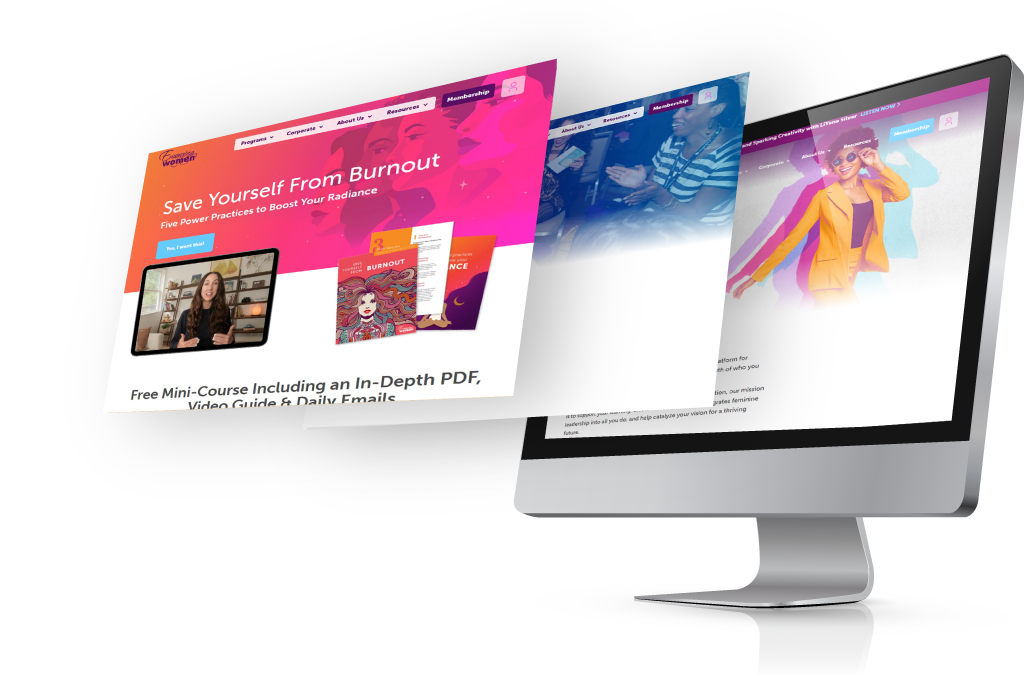
Leading Website Operations and Developing Design Systems
Steering website operations for this global leadership company with a 50,000 member reach. Managing a cross-functional team. Mentoring, improving outcomes and helping women expand in their careers.
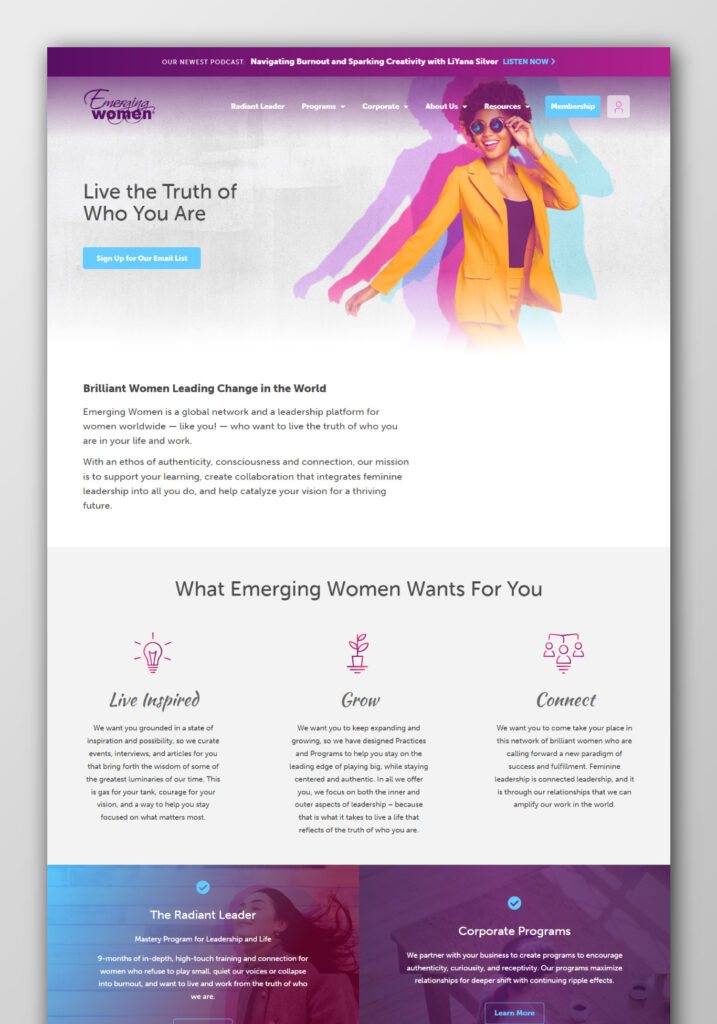
Overview
Emerging Women is a global leadership company that helps connect women together, develop leadership skills, and inspire women to become the best in their field and life. While I was working with Emerging Women doing all website operations for 3 years, this outlines a specific project I managed and oversaw, the website overhaul, to redesign the website of over 100 pages.
- Role: Project Manager, Lead Developer, Leaderr of a Cross-Functional Team
- Sector: Leadership, Education, Femtech Leadership, Social Impact
- Time: 20 Weeks
- User Group: Women aged 30-50 in high powered careers or thinking about moving into management
- Tools: Figma, Adobe Illustrator, InDesign, WordPress, Elementor, Asana, Google Docs, Slack
Project Scope & Objectives
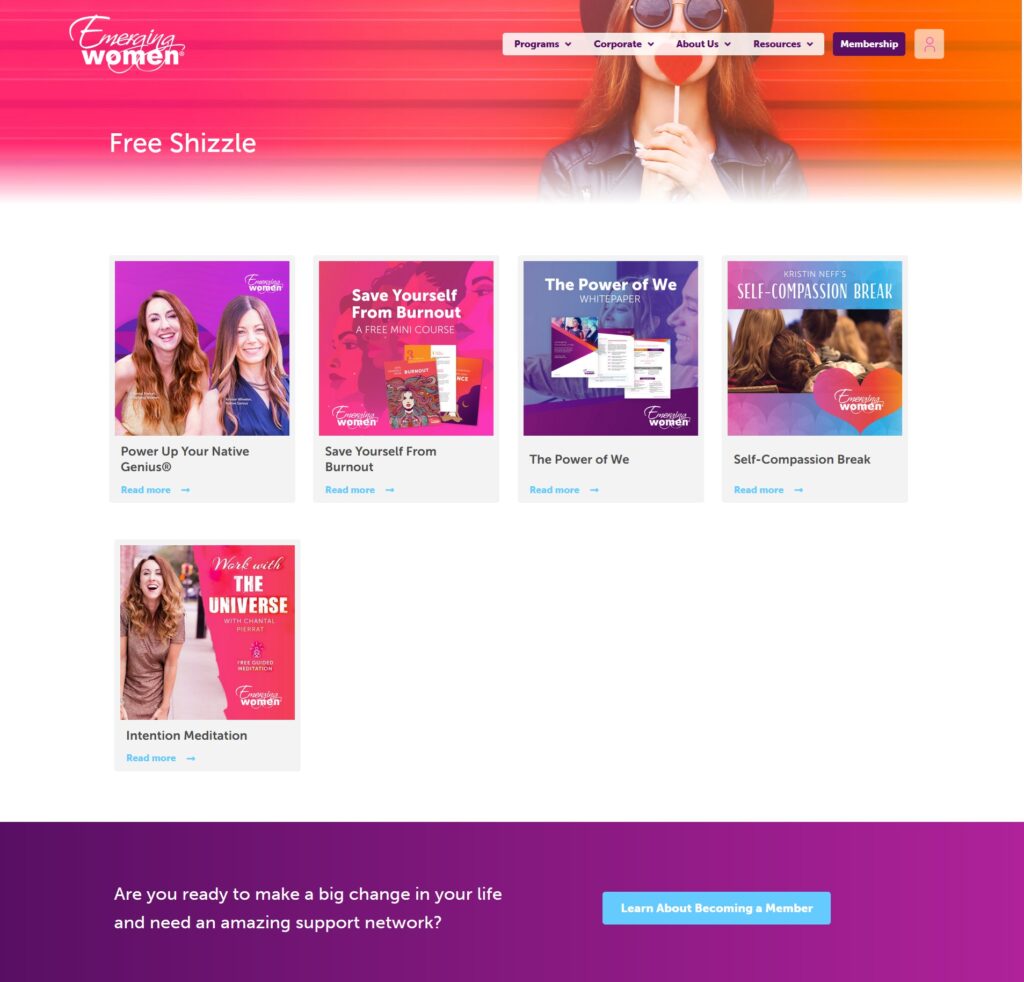
- Develop a Bold, Modern Aesthetic to better connect with emerging women leaders.
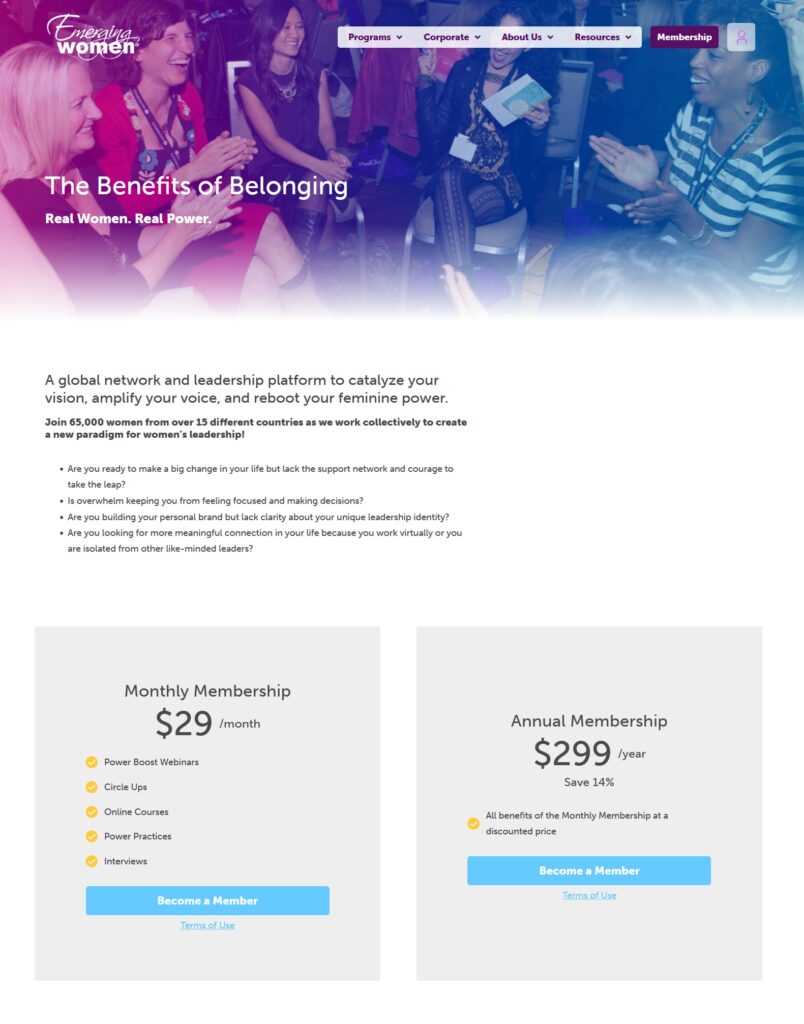
- Redesign the Website for a Seamless User Experience, improving navigation and accessibility.
- Streamline Content Organization to enhance clarity and engagement.
- Showcase Programs & Free Resources Effectively to drive awareness and participation.
- Maintain and Strengthen SEO Performance to preserve visibility and organic reach.
Vision and Goals
The website had not been updated for Emerging Women in almost a decade. In that time website standards and design had changed significantly. Emerging Women wanted a fresh design that felt trendy and a bit edgy. They wanted clients to go to the website and feel like they were going to get fresh perspectives.
Emerging Women also had many newer programs that weren’t being represented well with the old website. The organization of the old website was confusing and not lending itself to users finding information.
At the same time it was important that SEO remain the same, which meant we were limited in rewriting much of the content.
Project Planning & Timeline
To ensure a smooth and efficient website redesign, I developed a structured project plan, outlining key phases, milestones, and deadlines.
Phase
Key Tasks
Timeline
Discovery & Research
Conduct stakeholder interviews, analyze current site performance, identify user needs, and define project goals.
Week 1-2
Strategy & Planning
Develop sitemap, define content strategy, create wireframes, and align with SEO best practices.
Week 3-4
Design & Branding
Create high-fidelity mockups, refine UI/UX elements, review with stakeholders, and implement feedback.
Week 5-10
Development & Implementation
Build the site, integrate CMS, ensure responsiveness, and conduct internal testing.
Week 10-15
Testing & Optimization
Perform usability testing, fix bugs, optimize site speed, and refine SEO.
Week 15-18
Launch & Post-Launch Support
Deploy the website, monitor performance, and provide training/documentation.
Week 19+
- Discovery & Research (Week 1-2)
- Conduct stakeholder interviews
- Analyze current site performance
- Identify user needs and define project goals
- Strategy & Planning (Week 3-4)
- Develop sitemap and content strategy
- Create wireframes
- Align with SEO best practices
- Design & Branding (Week 5-10)
- Create high-fidelity mockups
- Refine UI/UX elements
- Review designs with stakeholders and implement feedback
- Development & Implementation (Week 10-15)
- Build the website and integrate CMS
- Ensure mobile responsiveness
- Conduct internal testing
- Testing & Optimization (Week 15-18)
- Perform usability testing
- Fix bugs and optimize site speed
- Refine SEO
- Launch & Post-Launch Support (Week 19+)
- Deploy the website
- Monitor performance and fix any issues
- Provide training and documentation to the client
Project Management Approach
- Utilized Agile methodology with weekly check-ins and iterative feedback loops.
- Managed the project using Asana (task tracking), Slack (team communication), and Google Docs (content collaboration).
- Coordinated cross-functional teams, ensuring alignment between designers, developers, content writers, and stakeholders.
This structured timeline and planning approach ensured an on-time, high-impact website launch while fostering team collaboration and continuous improvement.
Stakeholders & Team Structure
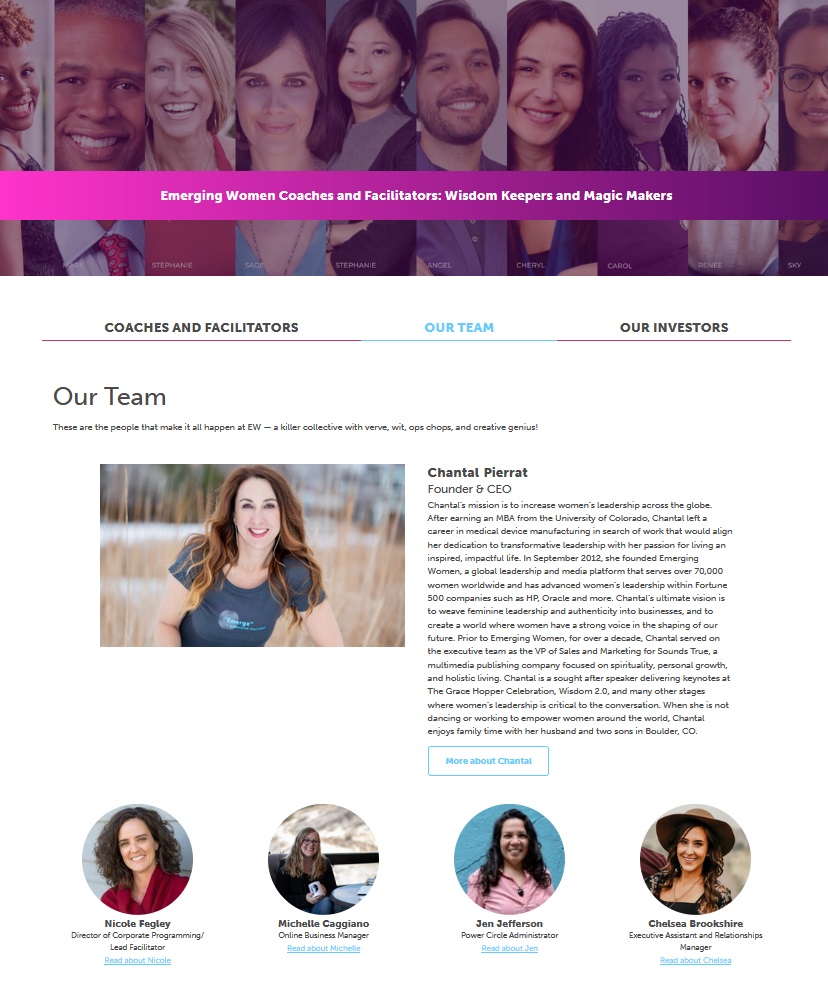
Core Project Team:
- Project Manager (Kaitlyn Chasarik)
- Led the project, coordinating between internal teams and external vendors.
- Managed timelines, tasks, and communication between stakeholders.
- Actively participated in the development phase, contributing to front-end development tasks alongside other developers.
- Mentored the designer, providing guidance on web design principles and ensuring a smooth workflow across teams.
- Designer
- Hired by the Founder to handle the creative aspects of the project.
- Responsible for visual design elements, including branding, typography, and overall aesthetics.
- Since the designer primarily worked on print media previously, they required extensive mentoring to transition into web design.
- With my guidance, they were able to develop the necessary skills for creating effective and responsive web layouts.
- External Developer
- Brought in to handle the technical aspects of the project, including front-end and back-end development, CMS integration, and website functionality.
- Worked closely with you to ensure that design elements were properly implemented while maintaining responsive design and site performance.
- Content Writers
- Responsible for developing website copy, ensuring it aligned with the brand’s voice and SEO strategy.
- Collaborated closely with you to update and optimize content for user engagement and clarity.
- SEO Expert
- Ensured the website adhered to best SEO practices to maintain and improve organic search rankings.
- Worked alongside the content writers to integrate target keywords while preserving the overall user experience.
Primary Stakeholder:
- Founder & CEO of Emerging Women
- As the primary stakeholder, the Founder & CEO was instrumental in defining the project vision, goals, and brand direction. They were involved in high-level decisions, ensuring the website redesign aligned with the company’s broader objectives and values.
Collaboration & Communication:
- Weekly check-ins with all team members, ensuring progress was on track and challenges were addressed.
- Used tools like Asana (task tracking) and Slack (communication) to keep everyone aligned and informed.
- Fostered an open, collaborative environment, especially with the designer, providing feedback and support throughout the project.
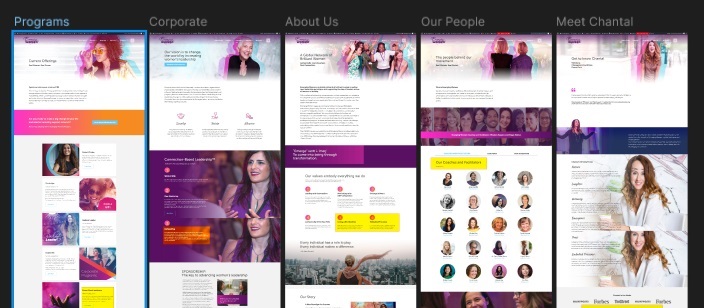
Mentoring & Onboarding a New Designer
Onboarding the new designer was a pivotal part of the project. Given her background in print media, she was unfamiliar with web design principles, so I focused on setting clear expectations from the start. We went over the project’s overall vision, goals, and the importance of user-centered design, ensuring she understood how her work would impact the final product. I provided her with resources and examples of successful web designs to build her confidence and knowledge.
As we progressed, I actively mentored her through every stage of the design process. I encouraged her to start with wireframes and basic layouts before refining the visuals. Alongside hands-on tasks, I organized regular check-ins where we could review her work, discuss challenges, and explore solutions together. This approach allowed her to grow quickly while staying aligned with the team’s needs and project goals.
Throughout the project, I made sure she felt supported and empowered to ask questions. I offered constructive feedback and fostered a growth mindset, which helped her gain a deeper understanding of web design principles like responsiveness, UX, and navigation. By the end of the project, she had not only contributed effectively to the redesign but also gained the confidence and skills to take on future web design projects independently.
This also meant that I could rely on her to design for the website as new pages were needed for upcoming projects over the year.
Challenges & Risk Management

One of the key challenges during the website redesign project was managing scope creep. As the project progressed, the Founder and CEO suggested additional features and design elements that weren’t part of the original plan. To manage this, I implemented a clear change request process, which included reviewing any proposed changes in terms of their impact on the timeline, resources, and budget. By setting boundaries and prioritizing core features, I ensured that the project stayed on track and within scope.
Another challenge was working with the new designer, who lacked web design experience. While her creative skills were strong, she required mentoring to understand web-specific design concepts such as responsive layouts and user experience. To mitigate this, I dedicated extra time for one-on-one sessions, providing resources and feedback to help her build confidence. This ongoing support allowed her to quickly adapt and contribute effectively to the project.
Lastly, ensuring the site maintained SEO performance during the redesign was critical. With the changes to the website’s structure and content, there was a risk of losing organic traffic. I worked closely with SEO experts to develop a strategy that included keyword optimization, proper redirects, and content updates while maintaining a user-friendly design. By testing and refining SEO elements throughout the project, we successfully minimized any negative impact on search rankings and ensured the website performed well post-launch.
Execution & Implementation
The execution phase of the website redesign was a collaborative effort, with all team members working together to bring the vision to life. I guided the design team through the process, ensuring that the wireframes evolved into visually cohesive, responsive layouts. The designer, despite her lack of web design experience, quickly adapted to the new requirements with hands-on mentoring and frequent feedback. Key design decisions were made using Figma and InVision, which allowed for real-time collaboration and iteration. We made sure each page was optimized for both desktop and mobile views, maintaining a seamless experience across devices.
Design Implementation:
- High-Fidelity Designs: Transformed wireframes into fully designed pages, adhering to brand guidelines while prioritizing user experience and mobile responsiveness.
- Collaboration Tool: Utilized Invision and Figma for design iterations, gathering real-time feedback from the team to refine visuals.
- Mentorship: Provided hands-on training to the designer, focusing on web-specific aspects like UX/UI, responsive design, and interactive elements.
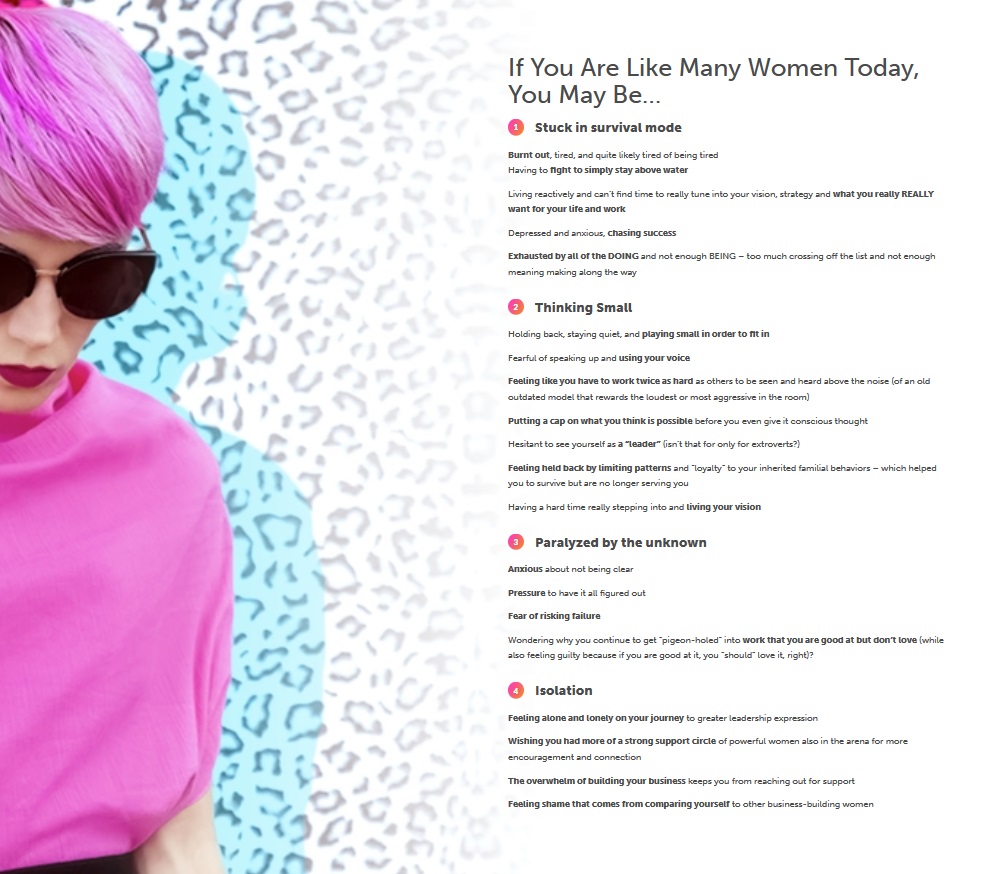
On the development side, the external developer worked alongside me to translate the designs into functional web pages. We chose WordPress as the platform and used Elementor for the page builder, which allowed for a flexible and user-friendly design process. Since the client was already familiar with these tools, it ensured that the team would have an easy time maintaining the site after launch. I worked on both front-end coding and supporting the developer with technical issues as they arose, ensuring the site remained aligned with the design while maintaining performance and speed.
Development Implementation:
- Platform Choice: Kept WordPress and Elementor from the previous website to ensure a smooth transition and easy management for the client.
- Front-End Development: Contributed to front-end tasks, including styling, layout adjustments, and troubleshooting during the build.
- Collaborative Development: Worked closely with the external developer to implement the responsive design and test site performance.
- Testing: Ran internal tests to identify bugs and optimize loading times across various devices.
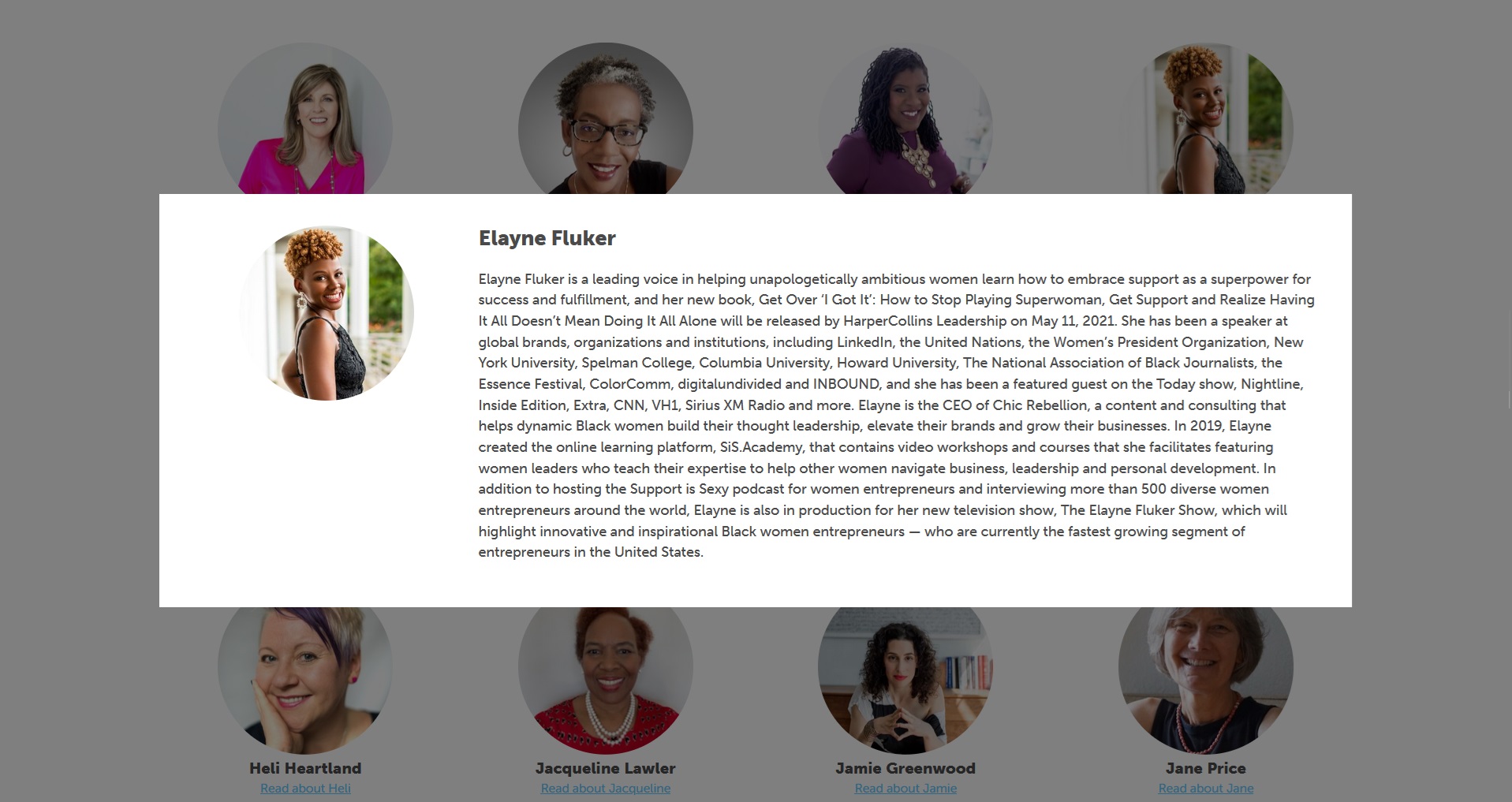
The content writers and SEO experts were also integral to the execution process. As the site structure evolved, the writers updated the website’s copy, aligning it with the new design and ensuring clarity and engagement. I had to delegate specific responsibilities, such as appointing one writer to take charge of gathering updated bios from all the guest speakers and collaborators. This task required communication and coordination with multiple stakeholders, as the bios needed to be accurate, consistent, and aligned with the updated content on the site. The SEO experts ensured the site would maintain its search engine rankings, implementing SEO best practices throughout the content. They focused on meta tag optimization, keyword integration, and setting up 301 redirects to avoid losing any organic traffic after the redesign.
Content & SEO Implementation:
- Content Updates: Wrote and optimized content, maintaining brand consistency and improving readability.
- Speaker Bios: Assigned one writer to gather and standardize updated bios from all guest speakers and collaborators, ensuring accuracy and consistency.
- SEO Strategy: Conducted keyword research and applied on-page SEO strategies to boost organic traffic.
- 301 Redirects: Configured redirects to maintain SEO rankings and prevent broken links post-launch.
- Content Collaboration: Worked closely with SEO experts and content writers to ensure all content was optimized for both users and search engines.
Throughout the execution phase, I maintained open lines of communication with the entire team, organizing regular check-ins to monitor progress and address any emerging issues. This ensured that all tasks were completed on time, with clear feedback loops and an aligned vision for the website. The collaborative effort in the execution phase set the stage for a seamless launch and successful post-launch experience.
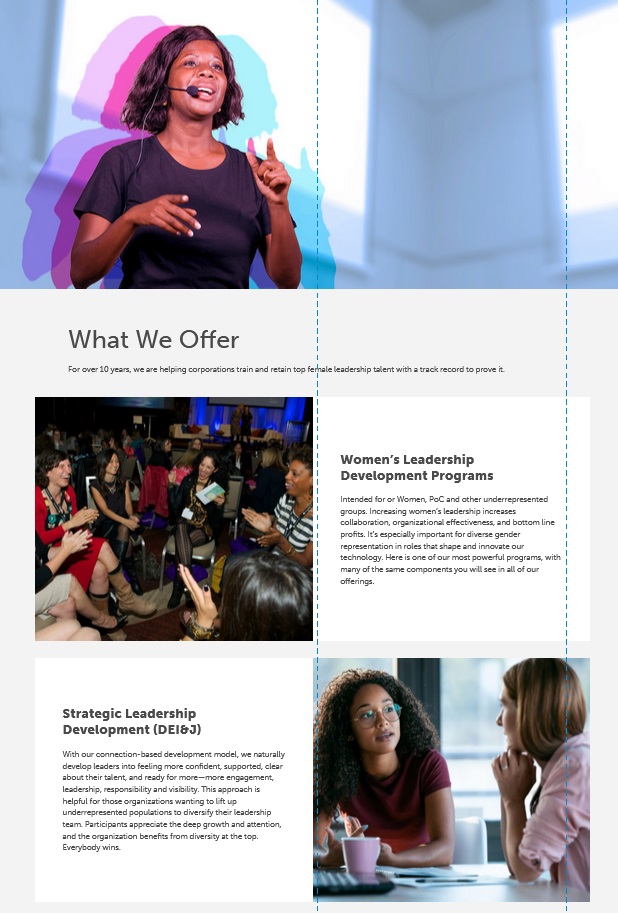
Key Outcomes
- Improved Brand Connection: The bold, modern aesthetic created a stronger emotional connection with the target audience, reinforcing the brand’s commitment to empowering women leaders.
- Elevated Visual Identity: The updated design successfully aligned with the brand’s vision, creating a contemporary, dynamic online presence.
- Stronger Audience Engagement: User feedback showed that the new design resonated with the community, enhancing brand loyalty and trust.
Conclusions
The redesigned website successfully achieved all of the project’s key objectives, delivering significant improvements in both aesthetics and functionality. By developing a bold, modern aesthetic, the new website better connected with the target audience of emerging women leaders. The fresh design resonated with the community, strengthening the brand’s position as a forward-thinking, empowering platform for women. The visual identity was modernized to better reflect the organization’s mission, featuring vibrant colors, engaging typography, and empowering imagery that spoke to the audience’s values.
The redesign significantly enhanced user experience by simplifying navigation and improving content organization. Visitors could quickly find relevant information, leading to greater engagement with programs and resources.
User Experience & Content Organization Results:
- Better Navigation: Simplified structure made the site more intuitive and accessible.
- Higher Engagement: More users interacted with programs and free resources, increasing participation.
The project focused on SEO to preserve and boost organic reach. Through strategic SEO practices, including 301 redirects and keyword optimization, the site maintained its search rankings and saw an increase in traffic.
SEO & Organic Reach Results:
- SEO Retention: Maintained high rankings, ensuring continued organic visibility.
- Increased Traffic: SEO optimizations resulted in more visitors, leading to greater lead generation.
The project fostered team growth, especially for the designer, who gained essential web design skills, further benefiting future projects. Overall, the redesigned site successfully aligned with the organization’s goals and positioned them for continued growth and impact.