UI/UX Research and Design
White Label Billing Software
Meridian Integration is a leading software used by utilities companies for the user-facing parts of their product. To compete within their industry they needed a design overhaul to make a name for themself as the product that offers the most ease of use to utility companies and their customers.
Diving Into User Experience for a Utilities App
Meridian Integration is the software used by several of the leading utilities companies for the user-facing parts of their product. To compete within their industry they needed a design overhaul that updated their product, but more importantly was as user friendly as possible to be able to make a name for themself as the product in the space that offers the most ease of use to utility customers.
Overview
Meridian Integration is a software for Utilities (water, gas, electric, etc.) to use as the front-facing part of their company. They several parts to their software, from having a customer sign up to pay their utility bill, to billing, to helping customers track their utility cycles so that they can use their utility more efficiently.
- Role: UX Designer, Part of a Cross-Functional Team
- Sector: SaaS, B2B, Utility, Software
- Time: 12 Weeks
- User Group: Mid-Size Utility Companies
- Tools: Figma, Adobe Illustrator, IOS, Android, Google Forms, Google Sheets
Vision and Goals
I was brought onto this project because of the need for Meridian Integration to compete with the existing market. Meridian wanted to focus on being the product that offered the most impact to the customer and utility company. There are major problems that Utility companies face, that could be addressed by software but are not because the average utility software has not been updated in decades. I was brought in to find these problems, offer solutions, and discover which solutions would give the most impact to both the customer and the utility company. This way Meridian Integration could implement these solutions with their development team and create a product that is significantly better than anything on the existing market.
Initial Surveys and Interviews
I began with interviews and surveys with the existing customer base of Meridian Integration, as well as the employees of Meridian to discover in their opinions what the biggest problems and sticking points were for Utility Companies. I did not focus yet on the software Meridian offered, because I knew in order to discover where it was possible for the software to go, I needed to first understand what issues utility companies face, regardless of if they’re related to software or not.
The main issues I discovered in this process:
- The customer’s ability to pay their bill
- Utility companies inability to reach their customers with any type of information
- Utility companies failing to offer proactive communication to their customers
- Major technological advancements within the utility company not being used by the utility or the customer to better serve both’s needs
- Processes are too complicated for the customer to impliment
- In times of high volume usage, utilities will often experience outages
Many of these issues could be helped or even solved by software that offers better functionality and flow, and that can create a better flow of communication between the utility and the customer.
Utility companies have existing hardware that could help the customer save money, and ultimately help the utility with the customer load. But most front-facing software offers little in the way of customer insight and encouragement.
As the existing utility software available on the market tends to be outdated by more than a decade, a newer look and functionality is important in keeping up with customer needs.
I then used the initial interviews and surveys to craft solutions and further questions for each of the major pain points, that I could further survey and come up with solutions for.
The Customer's Ability to Pay Their Bill...
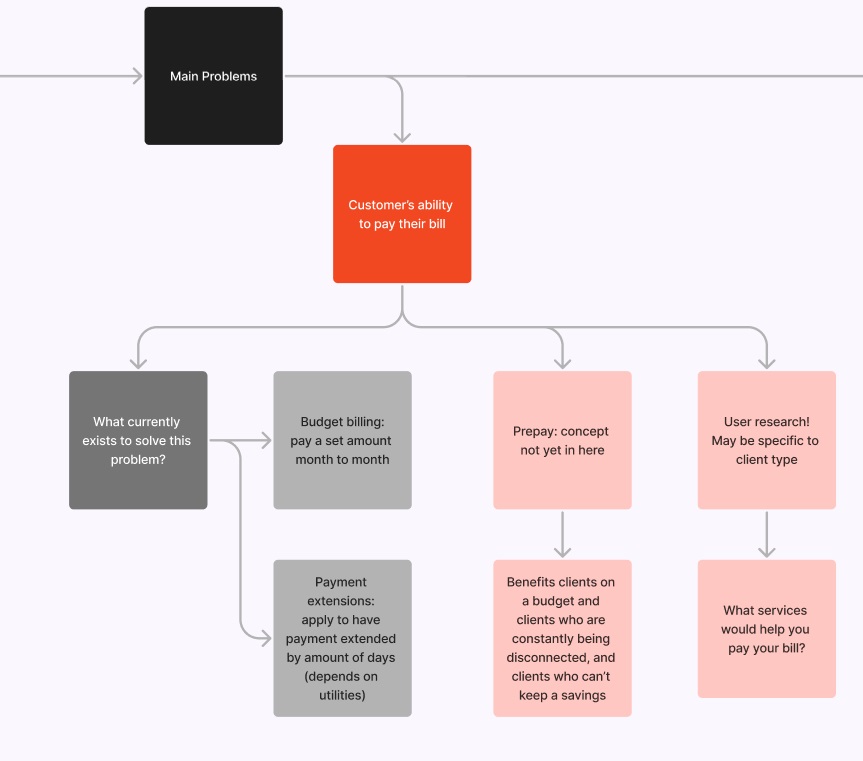
For this pain point the utility companies struggle with customer failures to pay bills but also how to make it easier on the customer. Utility companies do not want to turn utilities off on customers, as this can create serious issues. Many laws also protect customers from utilities being turned off.
The best solution is to make it as easy as possible for customers to pay bills, to open up communication channels to warn customers when they have an overdue bill or when a higher than average bill is expected, to help customers set up auto pay, to find different tools that can help customers pay bills early or extend their payment date.
All of these can be implemented through the software and help customers pay their bills. We want customers to be able to keep their lights on!
Improving Communication with the Customers...
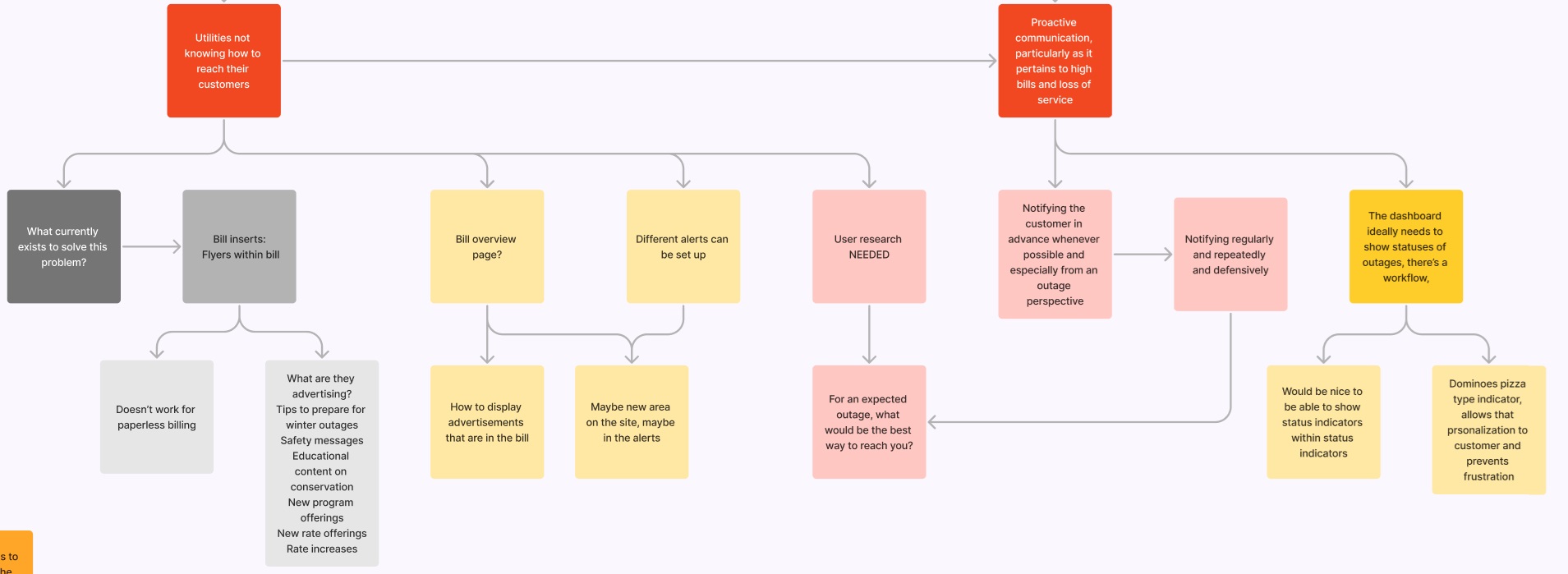
Utility companies in general struggle to successfully communicate with their customers. Whether this is related to new technologies and features they want the customer to know about, planned outages in the customer’s area, or making the customer aware of a late bill, communication channels are really important for utility companies.
Currently many utility companies continue to rely on snail mail to help them communicate with their customers. But a mail insert doesn’t work for paperless billing (which is also what the utility companies want to move their customers to).
But utility companies also already collect the necessary information to contact customers in alternative ways. Text messaging and email are both possibilities. Of course, for some messages you want the customer to be able to opt out, otherwise they may miss the important information. So the key is also to make sure that the information is going through the correct channels for each type of communication.
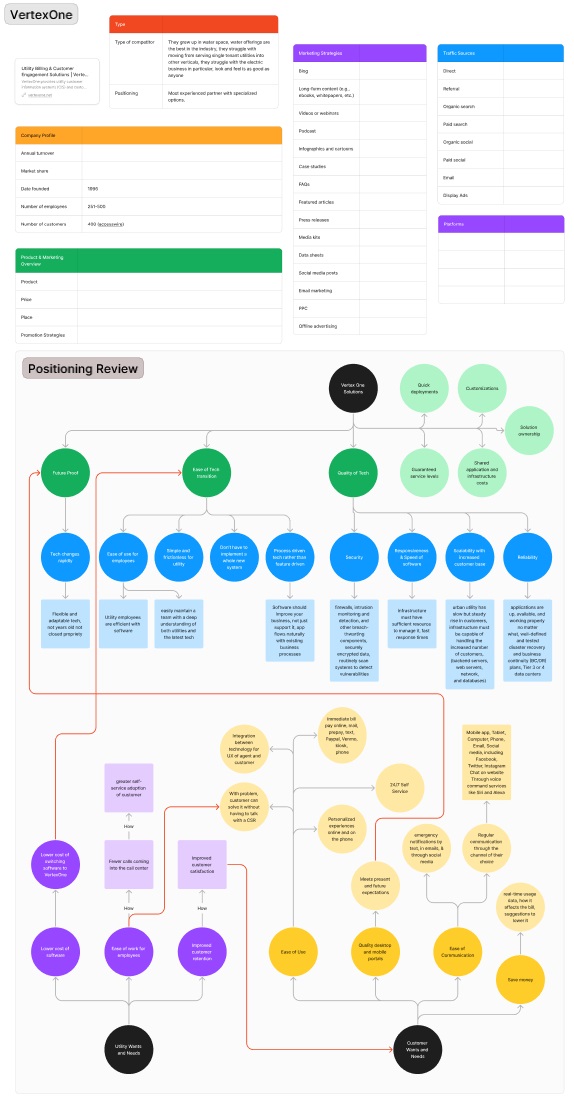
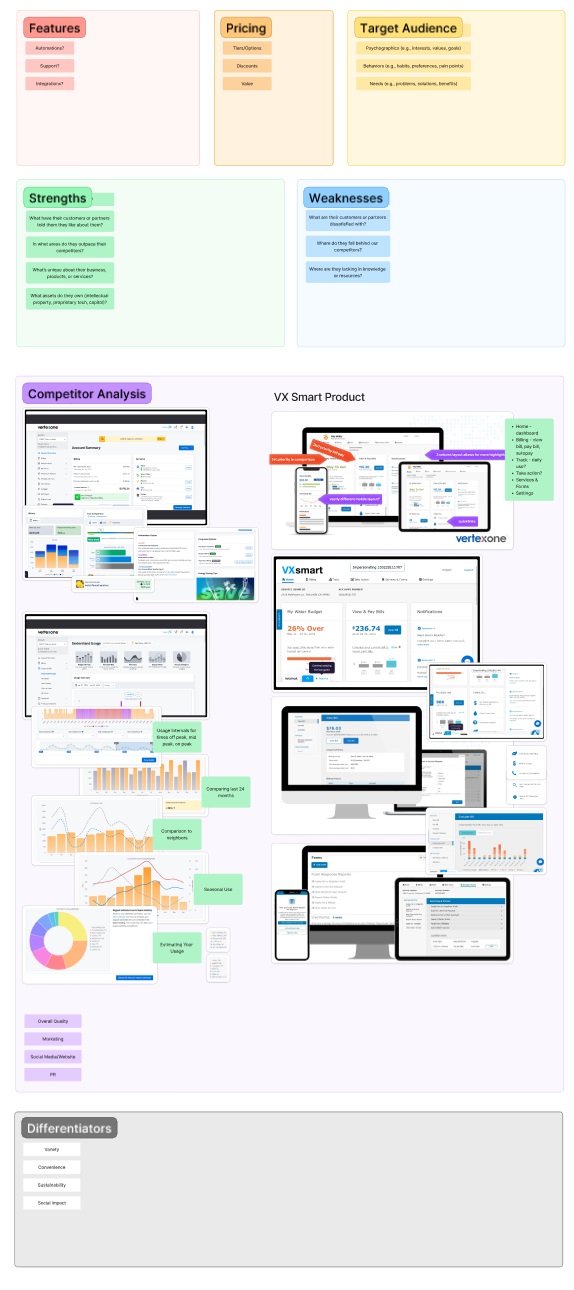
Meridian Integration identified 7 major competitors within the market. I created a full competitor analysis for each of them.
I first wanted to identify successful marketing strategies to help Meridian better market themself to their client base. We could then have the marketing team utilize more of these strategies and increase the visibility of Meridian Integration to potential clientele.
The competitor analysis was also very important in finding where we could position Meridian Integration in the existing market. They were holding an unusual position with the size of clients they serve. Mid-size utility companies don’t have as many options in comparison to both the small and large utility companies. However, some of their competitors were positioning themselves in ways that were attracting the companies Meridian should have been the primary software to serve. Understanding how each competitor positioned themself was incredibly important for this reason. Understanding each companies strengths and weaknesses, as well as their target audience and the features they provide was important in getting a gauge for where Meridian Integration existed in the current market and where they could grow.
Most important I wanted to see what other businesses were doing to help the identified problems. This would allow me to evaluate those solutions and create surveys with examples to find the most successful ones. It would also allow me to take not of the design of each product and create something that both fits within the existing understanding users have, while also being a unique solution for Meridian.
Example: What was VertexOne doing?
VertexOne focused first on water clients before moving into serving other utilities. But because their service was never intended to be used for electric they struggle to serve that business in particular.
Positioning on their website and marketing suggests that VertexOne succeeds most in their quality of tech, ease of tech transition, and future proofing their product. They claim to benefit the utility by offering lower costs of software, ease of work for the utility employees, and improved customer retention. They improve the experience for the utility customer with ease of use, quality mobile and desktop portals, and ease of communication, as well as helping customers save money through real-time usage data.
Although their service does not function as well for electric customers, they have successfully marketed themself to those clients.
When we dive into the actual product itself, they offer a couple different solutions depending on the type of utility. Their VX Smart Product has a neatly laid out dashboard that helps to understand information well. The design prioritizes comparison from month to month first, bill pay second, and notifications third. This is an interesting prioritization, as bill pay was rated as more important by the utility companies and their customers in my data.
The three column layout allows for more highlighted information than Meridian Integration’s previous two column layout. However their mobile layout is extremely different to their desktop product which could lead some confusion among customers of where to find information.
The biggest benefit VertexOne has is in their available charts and graphs of consumer data. They allowed the customer to be able to learn very effectively what sources of energy (or water) might be costing the most. This can allow a customer to more easily adjust their usage to benefit their own wallet, which in turn helps the utility company prevent outages. I disliked the organization of their charts as they felt difficult to use, and did not often offer the clear information about why someone might need to use certain charts.
For instance, comparison to neighbors can be one of the most effective tools in a customer wanting to save money. If they see that they spend more electricity than the neighborhood they are more likely to want to lower their usage effectively. However that chart was hidden in the comparison charts and difficult to find. It would be more effective to highlight that chart on the home dashboard, to encourage people to seek out how to adjust their utilities, which would then encourage them to look through the other charts. It’s not just about what the most important charts are in regards to the information it gives the user, it’s also about which charts offer the most encouragement and change in user behavior.
Repositioning
Meridian was originally a services company for large system integrations that got pulled into the product space because it had expertise in the market and there were a lack of compelling solutions. They modeled the tech after the underlying systems it was on top of, which was Oracle.
The look and feel hadn’t been updated since it was created, so it still had a look and feel of Oracle, which was an issue. As a company Meridian had yet to really put a lens to what customer issues they’re trying to solve. The product suite is still growing and has a lot of room for growth. The functionality was originally fairly middle of the pack in comparison to their competitors. What meridian was most lacking in was usability, since they had never truly considered their customer base from the very beginning.
The Existing Positioning Was Falling Flat
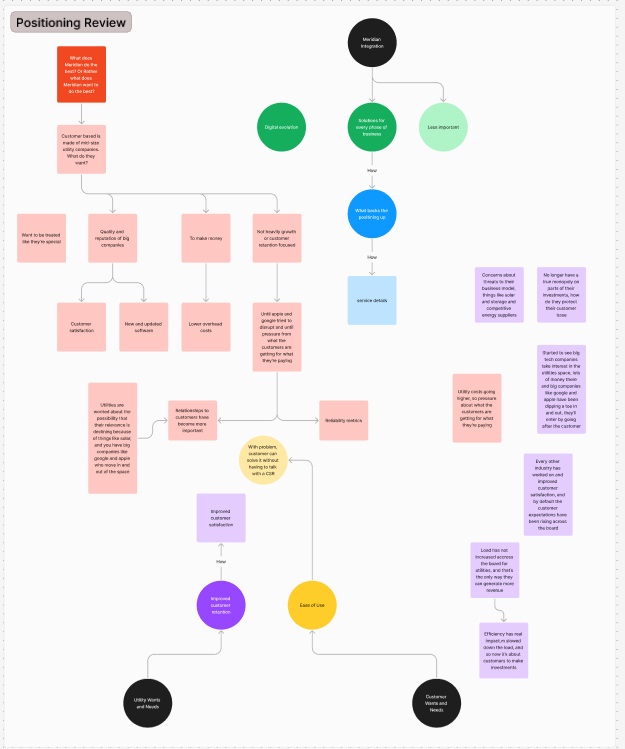
After reviewing the marketing materials and website I created a positioning review to be able to see where Meridian’s positioning was falling flat, where it could grow, and where in the market it could settle in comparison to their competitors.
What I found was that the existing positioning was often failing to backup their claims, was disjointed, and unfocused.
When I had interviewed their clients I had found that mid-size utility companies are most concerned about the quality and reputation of the software, they are focused on making money by lowering overhead costs, but they weren’t very customer growth focused. However, them not being growth or customer retention focused felt like a mistake when interviewing the utility customers. They were very willing to move to another utility if it was available to them, so retention was important from a customer standpoint, but would take some convincing of utility companies to understand just how important that aspect was.
Examples
“Empowering utility companies through every phase of their IT/OT lifecycle”
- Confusing, unclear
“Driving the Digital Evolution of Utility Companies”
- Better, but leaves questions and doesn’t focus on what the utility companies want most
Meridian's New Messaging
Based on the competitor analysis, interviews, and review of their company and marketing I could accurately find the positioning that might serve Meridian best moving forward:
- Ease of Use (requires UX focused design system)
- Product Quality (Like getting a big software for less)
- Lower Overhead Costs (Because of product solutions)
- The best product for both utility and customer base
Examples
“Get top-tier software without the premium price tag—seamlessly connect your customers using the tech you already use.”
“Cut costs, not quality—seamlessly connect your customers with the tech you already have using top-tier software.”
“Seamless connections, smarter savings—power up your tech and connect customers effortlessly without the extra cost.”
Design System
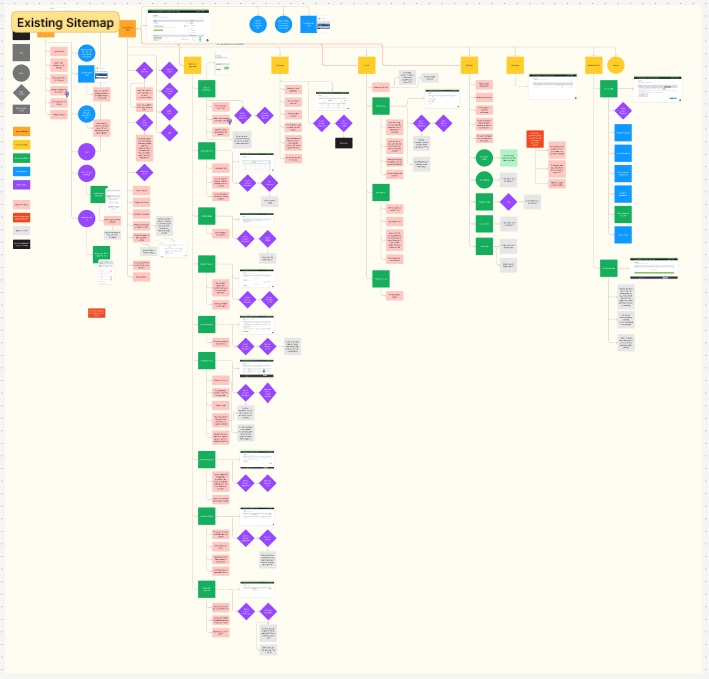
Because it became imperative the software needed to focus on the user experience, I needed to map the existing software to know where it could go. We started with the client side site, since that was the location identified as having the most immediate growth.
What I discovered combing through the app was that the responsiveness of the pages was almost entirely lacking, the language was confusing, the pages organized in a confusing way, there was no focus on what users were utilizing the most on the sitemap, and also no focus on what might become important in an emergency situation like an outage.
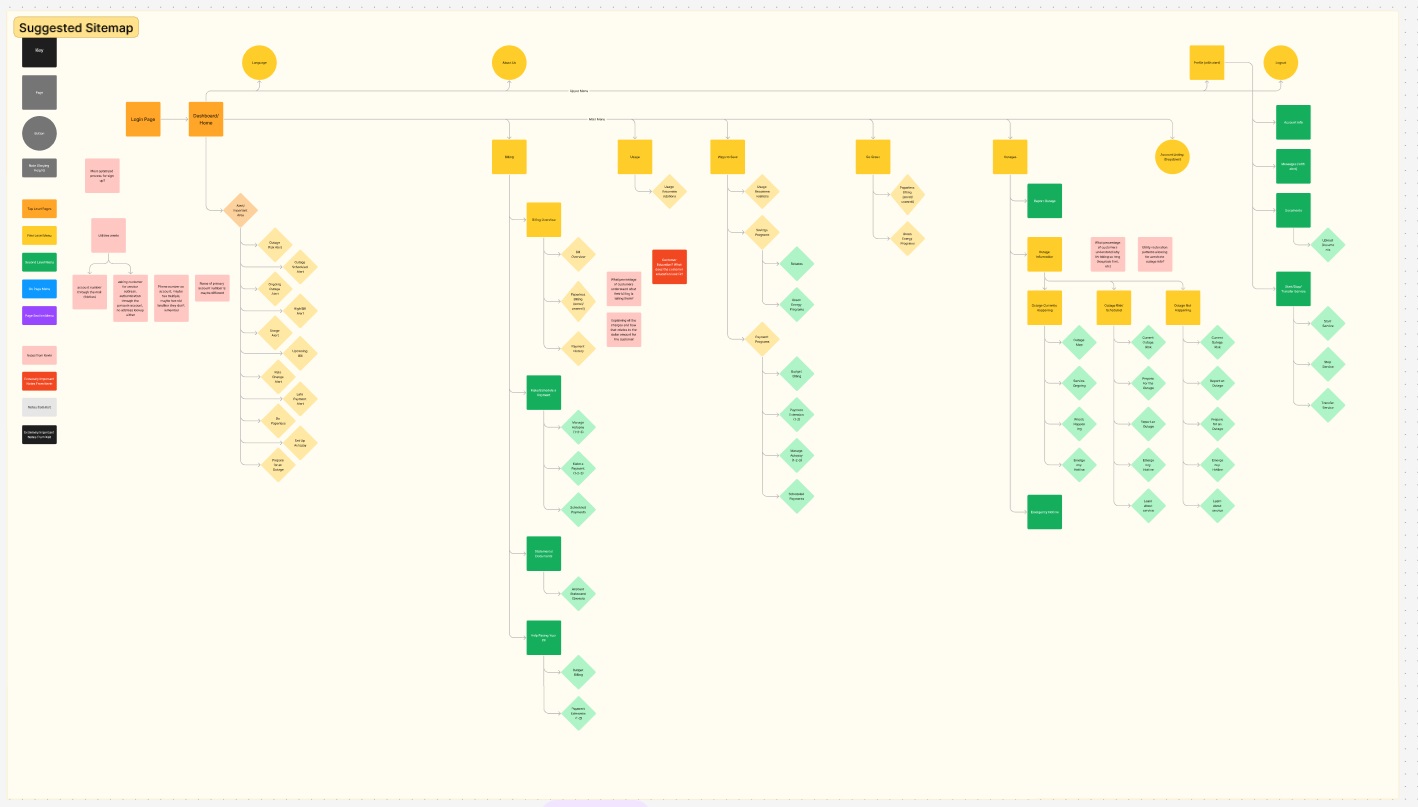
Revising the apps sitemap
I wanted to focus on clarity and what clients used the most, or may need in an emergency. I also wanted to make sure there were opportunities for the utility to call out important information and direct the customers to locations like ways to save money that would also benefit the utility companies.
I checked the sitemap through surveys and card sorting tools, asking utility customers to make sure that it would serve their purposes best. Simultaneously I surveyed the utility companies to find what information they thought was the most important for customers to know. This helped me get a sense for the best way to revise the sitemap and allowed me to create a much ore streamlined version that could serve customers much better.
User Journeys
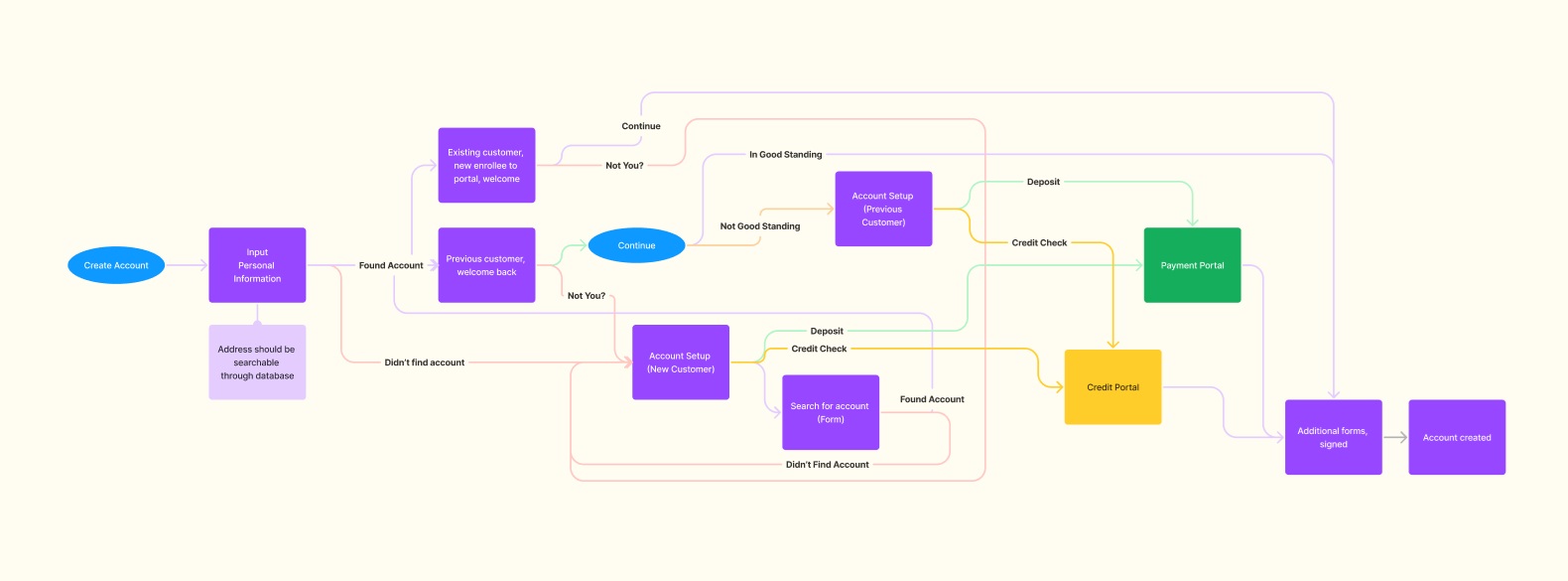
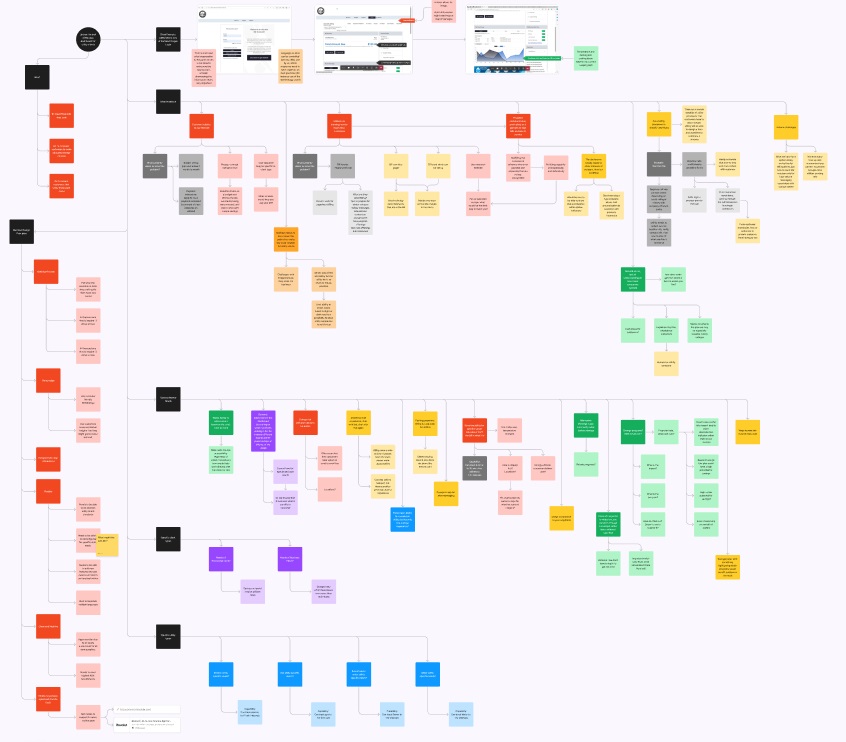
I created user journeys for each section of the app and revised them according to card-sorting and survey research of the utility companies and their clients.
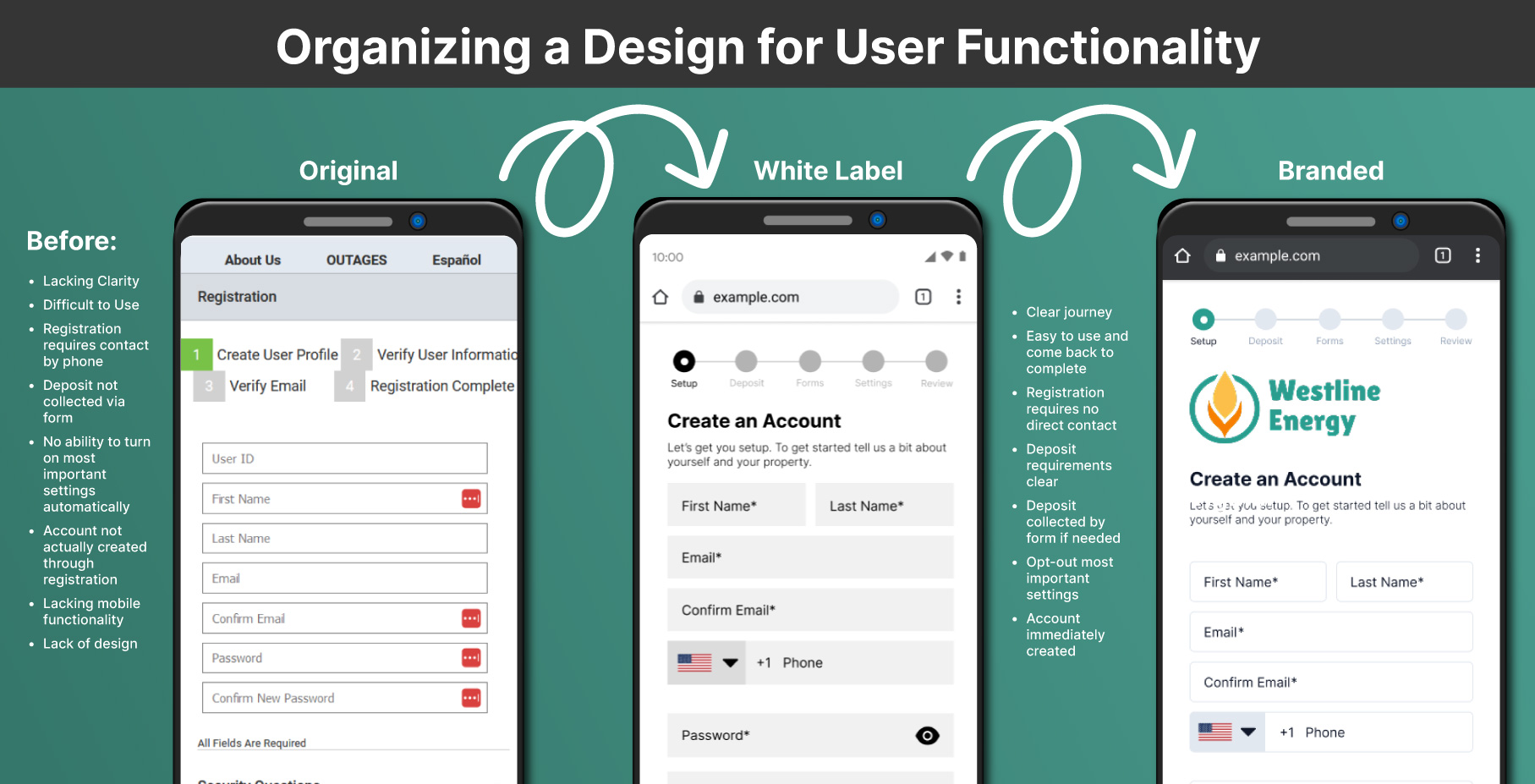
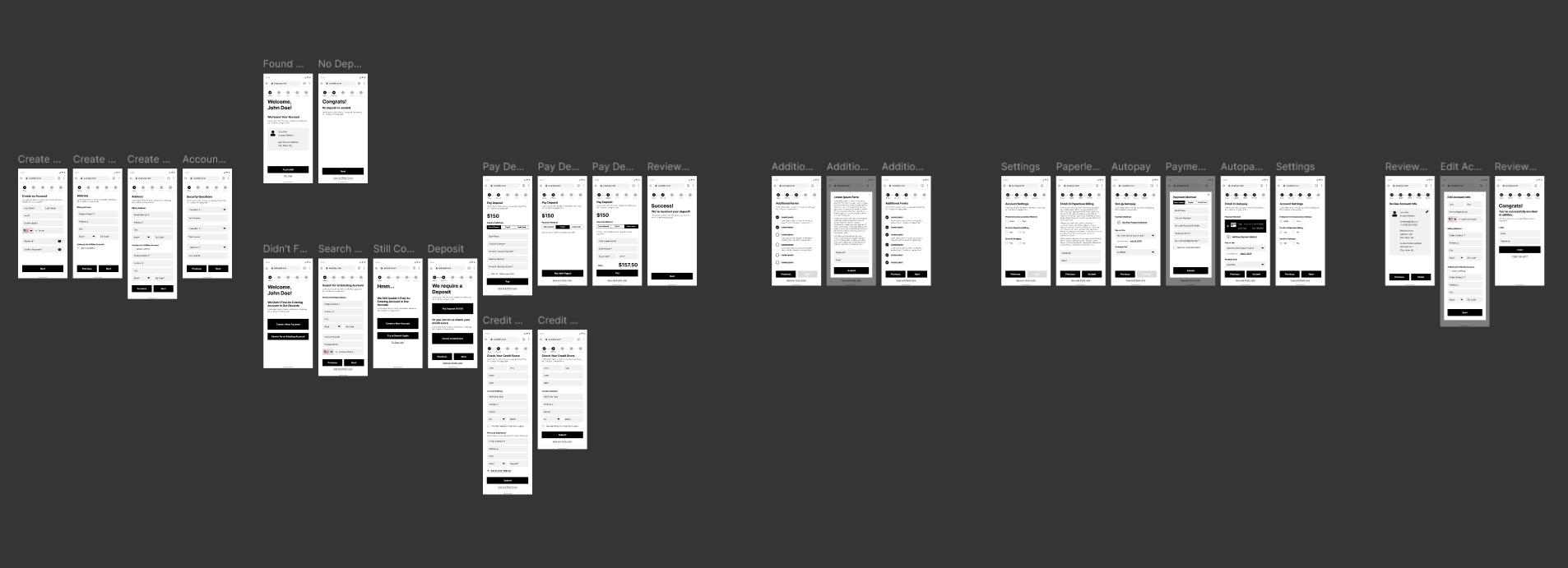
I started with the account creation section as this could offer some of the biggest benefits to the whole of the app. The existing account creation forced the customers to have to contact the utility companies by phone, often required multiple days of waiting time for customers to set up their utilities. This was both detrimental and potentially dangerous for customers, but also inconvenient and clunky.
It was also frustrating since many customers may not need to send a deposit at all. Many customers already had accounts with good standing with utility customers and were just setting up a business, or moving within the same area. That meant there was no reason to ask for a deposit at all. Connecting the utility user base with Meridian’s technology was imperative to a good user experience.
And then for customers that did not have previous accounts in good standing, the ability for them to submit a deposit online through the existing form would prevent any need for them to call the utility company. The streamlining of this process meant that utility companies could also save money since fewer customers calling meant less repetitive work for their employees.
Account Creation and Registration...
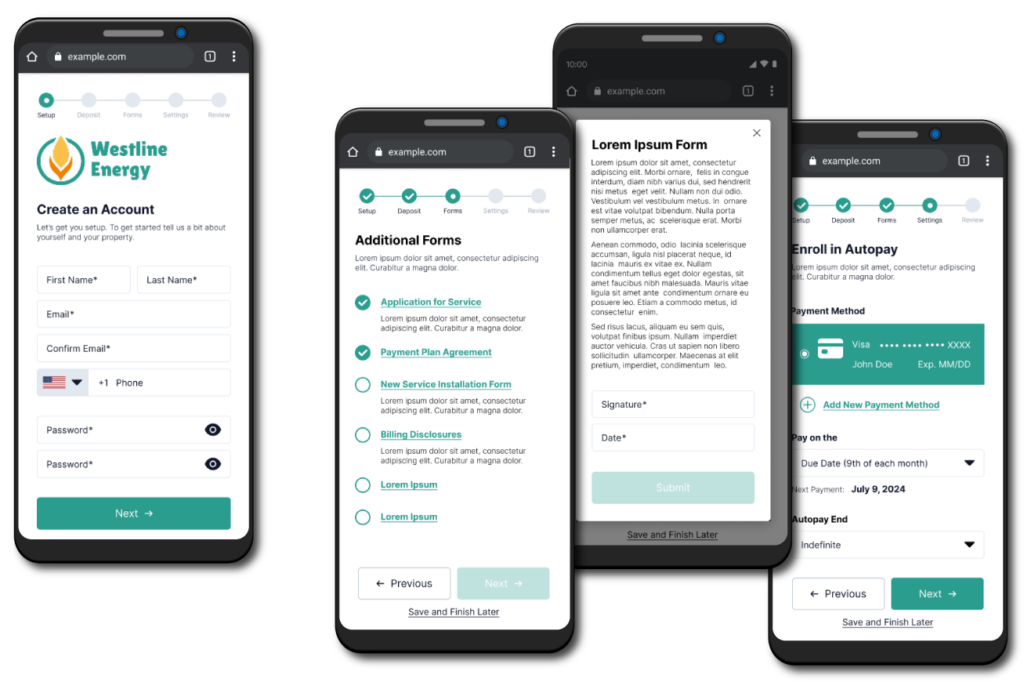
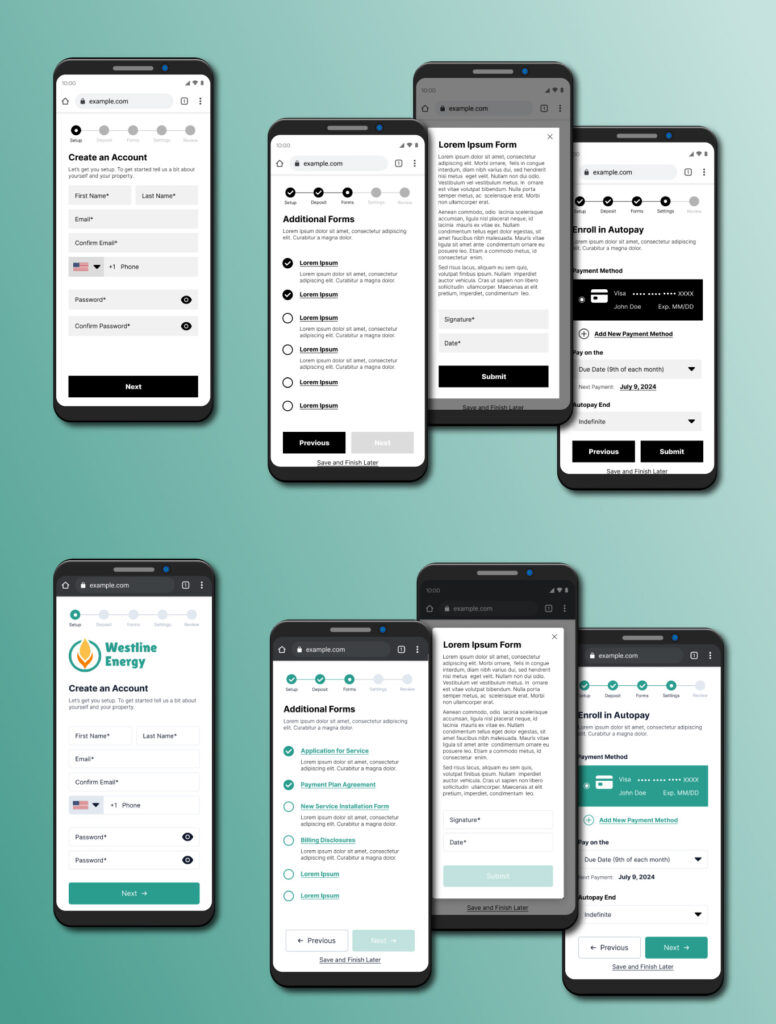
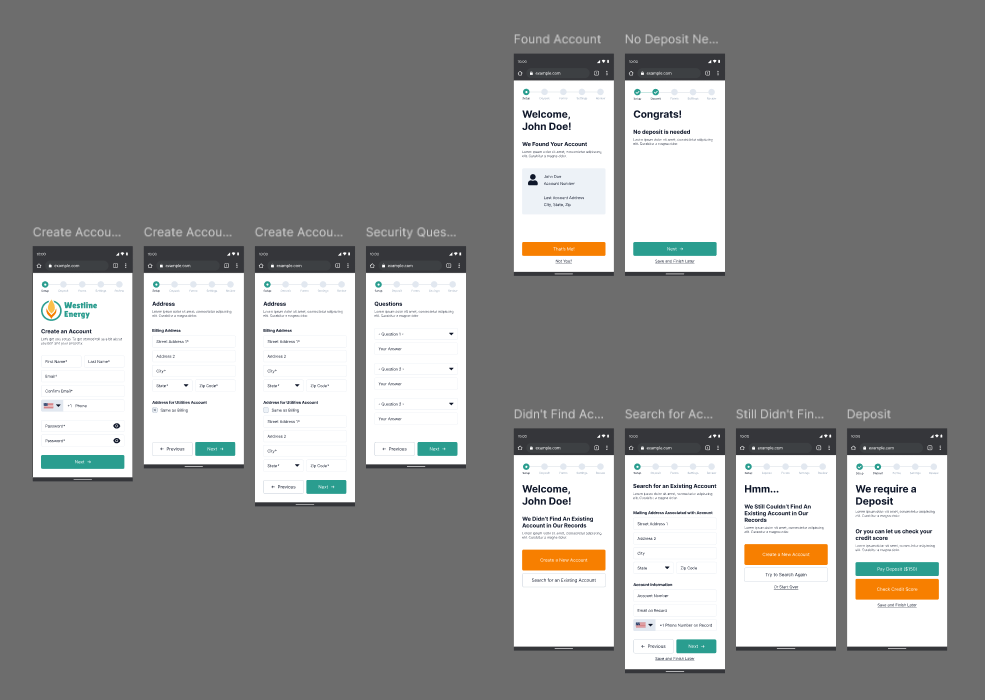
Using the user journey I created a lofi for Meridian following the account creation. The lofi was created for the mobile app using a mobile first approach to the design as this would better ensure that data displays well at every screen size.
The lofi was also refined to have some styling. This helped Meridian see the true benefit to the new user flow and the need for better styling of their application.
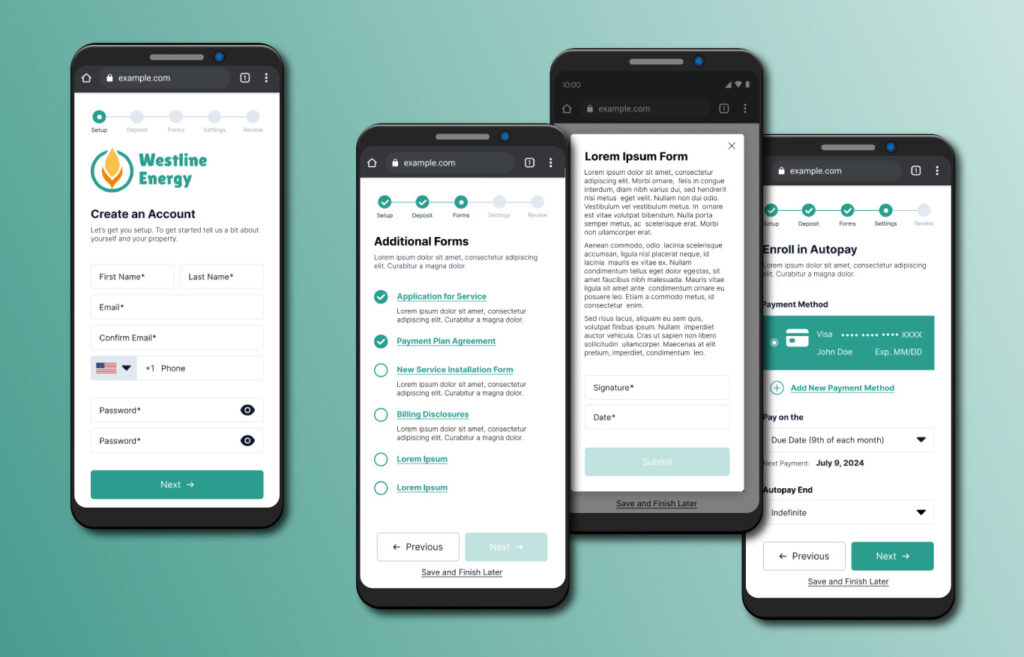
The hifi that was created from this mostly retains the styling with slight adjustments adding border radius’s to buttons and specifying which buttons might have different colors to each other. This is because the final design utilizes the colors of each specific utility, as part of the utility setup phase. Instead the component library of the design was the more important creation than a true hifi. The component library and hifis are confidential.
White Label
The nature of this software is to be able to be quickly revised to the colors and design needs of the utility company client. I completed a version of this flow with a nonexistent energy company named Westline Energy, to be used by Meridian Integration for sales.
This version also includes the high fidelity version of the design and the component library for this flow. It’s meant to be used for quickly revising this design to any utility company, so that sales can showcase the design and so that the development team can get a a clear understanding of any changes from the original.
Conclusions
Overall the designs created for Meridian help revise the entire app to make sure that it best benefits its customers and backs up its messaging. It helps Meridian better hold a clear advantage in a market that has needed better software for a decade.
This software is also incredibly important as utilities are used by every home. For utility companies it helps them better serve their customers while also benefiting them by helping them offer a superior product.
Design helps everyone.